How Reverse Proxies Improve Security and Performance
Leave a comment on How Reverse Proxies Improve Security and Performance
As modern websites and applications grow in complexity, managing traffic, security threats, and performance demands becomes increasingly challenging. One powerful yet often overlooked solution is a reverse proxy.
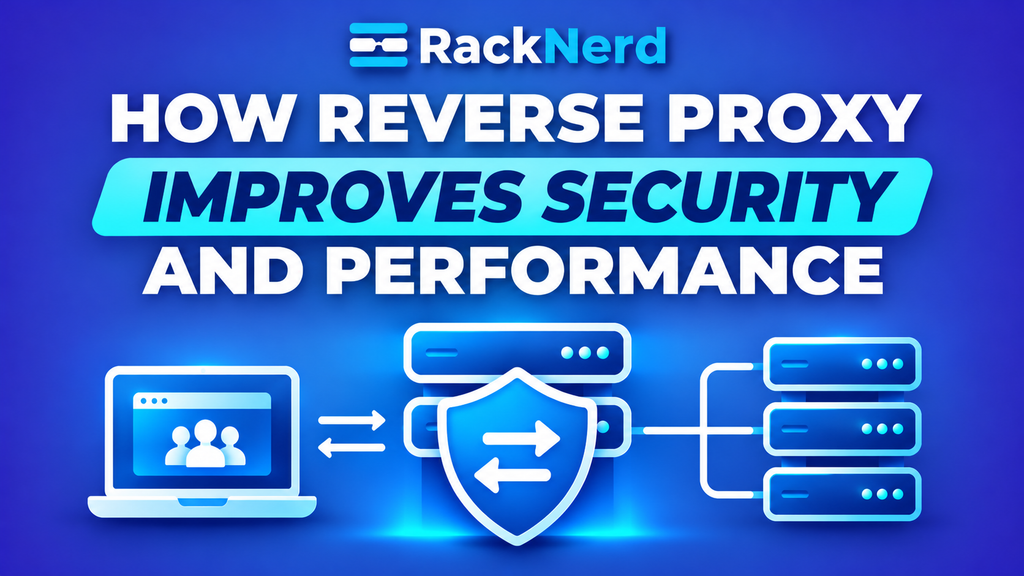
Acting as an intermediary between users and backend servers, a reverse proxy helps improve both security and performance while making web infrastructure more reliable.
In this guide, we’ll explore what a reverse proxy is, how it works, and the key ways it strengthens web infrastructure.
What Is a Reverse Proxy?
A reverse proxy is a server or service that sits between clients, such as users or web browsers, and backend web servers. Instead of users communicating directly with the origin server, requests pass through the reverse proxy first.
The proxy then forwards each request to the appropriate backend server and returns the server’s response to the client.
This setup gives organizations an additional control layer in front of their infrastructure. It enables better traffic handling, security enforcement, and performance optimization.
Reverse proxies are commonly used in enterprise applications, cloud platforms, and content delivery networks (CDNs).
How Does a Reverse Proxy Work?
To understand its value, it helps to look at how a reverse proxy handles a request step by step:
- A user sends a request through a browser or application.
- The request reaches the reverse proxy instead of the origin server.
- The reverse proxy analyzes the request based on predefined rules.
- It selects the most suitable backend server to handle the request.
- The selected server processes the request and prepares the result.
- The reverse proxy sends the response back to the client.
This process gives administrators more control over how requests are handled before they reach backend infrastructure.
How Reverse Proxies Improve Performance
A reverse proxy can improve website and application performance in several ways.
Load Balancing for Faster Response Times
One of the primary performance benefits of a reverse proxy is load balancing.
When multiple users access a website simultaneously, relying on a single server can lead to slow response times or even outages.
A reverse proxy distributes incoming traffic across multiple backend servers. By ensuring that no single server becomes overloaded, it helps maintain consistent speed and responsiveness.
This balanced approach also improves system reliability, especially during traffic spikes caused by promotions, product launches, or seasonal demand.
Content Caching and Acceleration
Reverse proxies can cache frequently requested content, such as images, scripts, and static pages.
When a user requests cached content, the reverse proxy can deliver it without forwarding the request to the backend server.
This significantly reduces server workload and shortens page load times. Caching is especially beneficial for global audiences because content can be served closer to users geographically, minimizing latency and improving the browsing experience.
SSL/TLS Offloading
Encrypting and decrypting secure traffic requires processing power. When backend servers handle all SSL/TLS operations, this can affect performance, especially under heavy traffic.
A reverse proxy can take over SSL encryption and decryption, a process known as SSL offloading.
This allows backend servers to focus on application logic while the proxy manages secure communication, resulting in improved efficiency and faster processing.
How Reverse Proxies Strengthen Security
Beyond performance improvements, reverse proxies provide an additional layer of protection between users and backend servers.
Hiding Backend Server Identity
One of the most important security advantages of a reverse proxy is that it can conceal the real IP addresses of origin servers.
Since users and potential attackers interact with the reverse proxy, backend servers remain hidden from direct exposure.
This reduces the risk of targeted attacks, including direct DDoS attempts and server reconnaissance.
Protection Against DDoS Attacks
Reverse proxies often include advanced traffic filtering and rate-limiting capabilities.
When abnormal traffic patterns are detected, malicious requests can be blocked or throttled before reaching backend servers.
Many enterprise-grade reverse proxies and CDNs are also designed to absorb large traffic volumes, making them useful for mitigating distributed denial-of-service (DDoS) attacks.
Web Application Firewall (WAF) Integration
Reverse proxies can integrate with or function as a Web Application Firewall (WAF).
This allows them to inspect incoming traffic for malicious payloads, SQL injection attempts, cross-site scripting (XSS), and other common threats.
By filtering harmful requests at the proxy level, organizations can add a layer of defense without modifying application code.
Improved Load Distribution and Traffic Control
Reverse proxies also provide more control over how traffic moves through an infrastructure.
Even Traffic Distribution
Instead of routing all requests to a single server, a reverse proxy intelligently distributes traffic across multiple servers.
This helps ensure optimal resource utilization and prevents performance bottlenecks.
Overload Prevention
When a server becomes unresponsive or overloaded, the reverse proxy can automatically reroute traffic to healthy servers.
This failover capability helps maintain uptime and prevent service disruptions.
Session Persistence
Certain applications require users to remain connected to the same server throughout a session. Examples include online banking and e-commerce platforms.
Reverse proxies can maintain session persistence to support a smooth and uninterrupted user experience.
Scalability and Operational Benefits
Beyond security and performance, reverse proxies make infrastructure easier to scale.
New servers can be added or removed without directly affecting the user experience because the proxy dynamically manages traffic routing.
They also simplify maintenance by allowing backend servers to be updated or taken offline without requiring the entire application to become unavailable. This flexibility is especially valuable for businesses running high-availability applications.
Additional Benefits of Using a Reverse Proxy
A reverse proxy provides several other operational advantages:
Improved Traffic Visibility: Reverse proxies provide detailed insights into incoming traffic patterns.
Centralized Access Control: Security rules, authentication, and IP restrictions can be managed from a single point instead of configuring each backend server separately.
Simple Backend Scaling: New servers can be added or removed without impacting users, as the reverse proxy dynamically adjusts traffic routing.
Reduced Backend Exposure: Only the proxy is publicly accessible, minimizing the attack surface of internal infrastructure.
Better Resource Utilization: By optimizing request handling, backend servers can operate more efficiently with less resource strain.
Conclusion
A reverse proxy is a strategic component of modern web architecture. By acting as an intelligent gateway between users and servers, it improves performance through load balancing, caching, and SSL offloading while strengthening security by hiding server identities and filtering malicious traffic.
For organizations aiming to deliver fast, secure, and reliable digital experiences, implementing a reverse proxy can be an important part of building resilient and scalable online systems.
As web threats evolve and performance expectations rise, reverse proxies continue to play a valuable role in modern infrastructure.
For businesses and developers building scalable web applications, a flexible hosting environment is equally important. RackNerd VPS hosting gives you the ability to configure your server infrastructure and deploy the services and tools that best fit your application requirements.